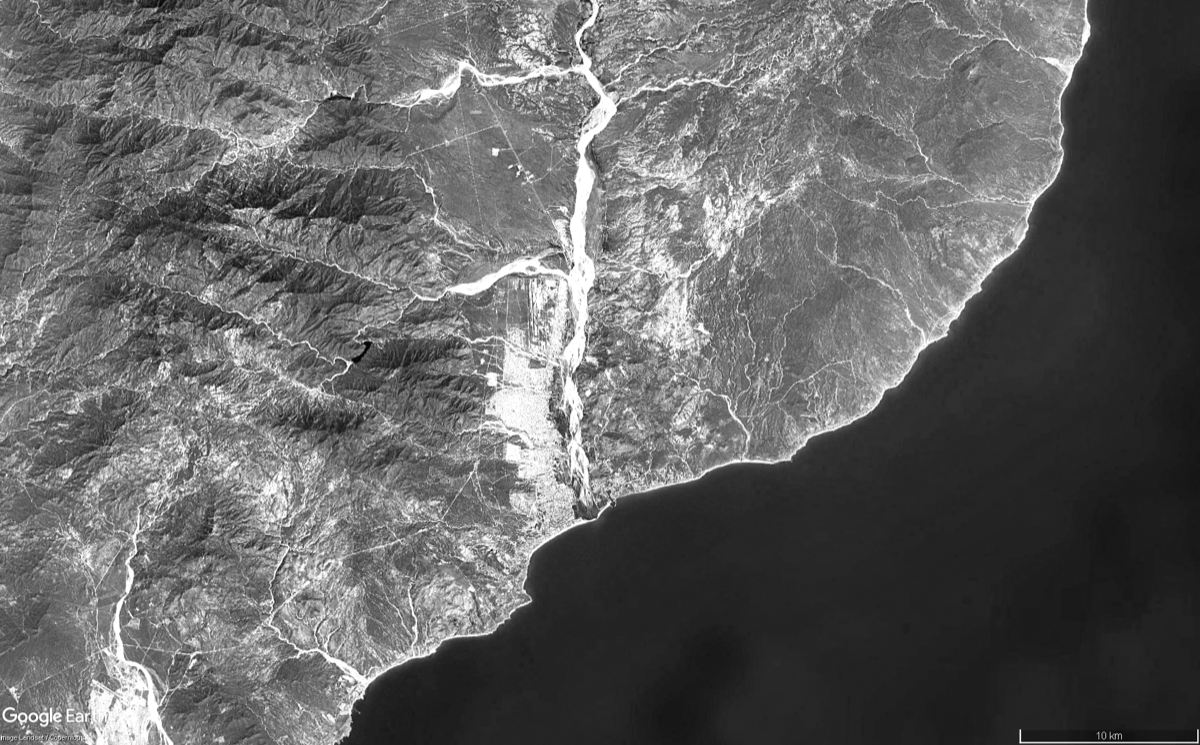
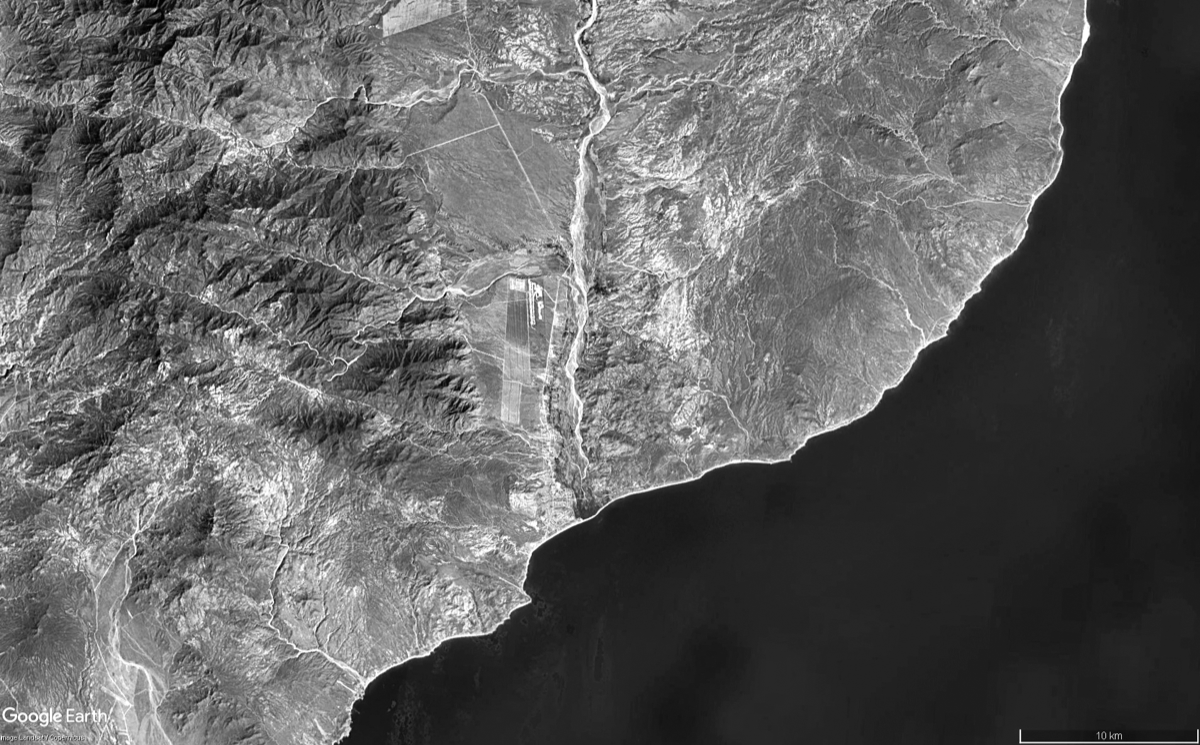
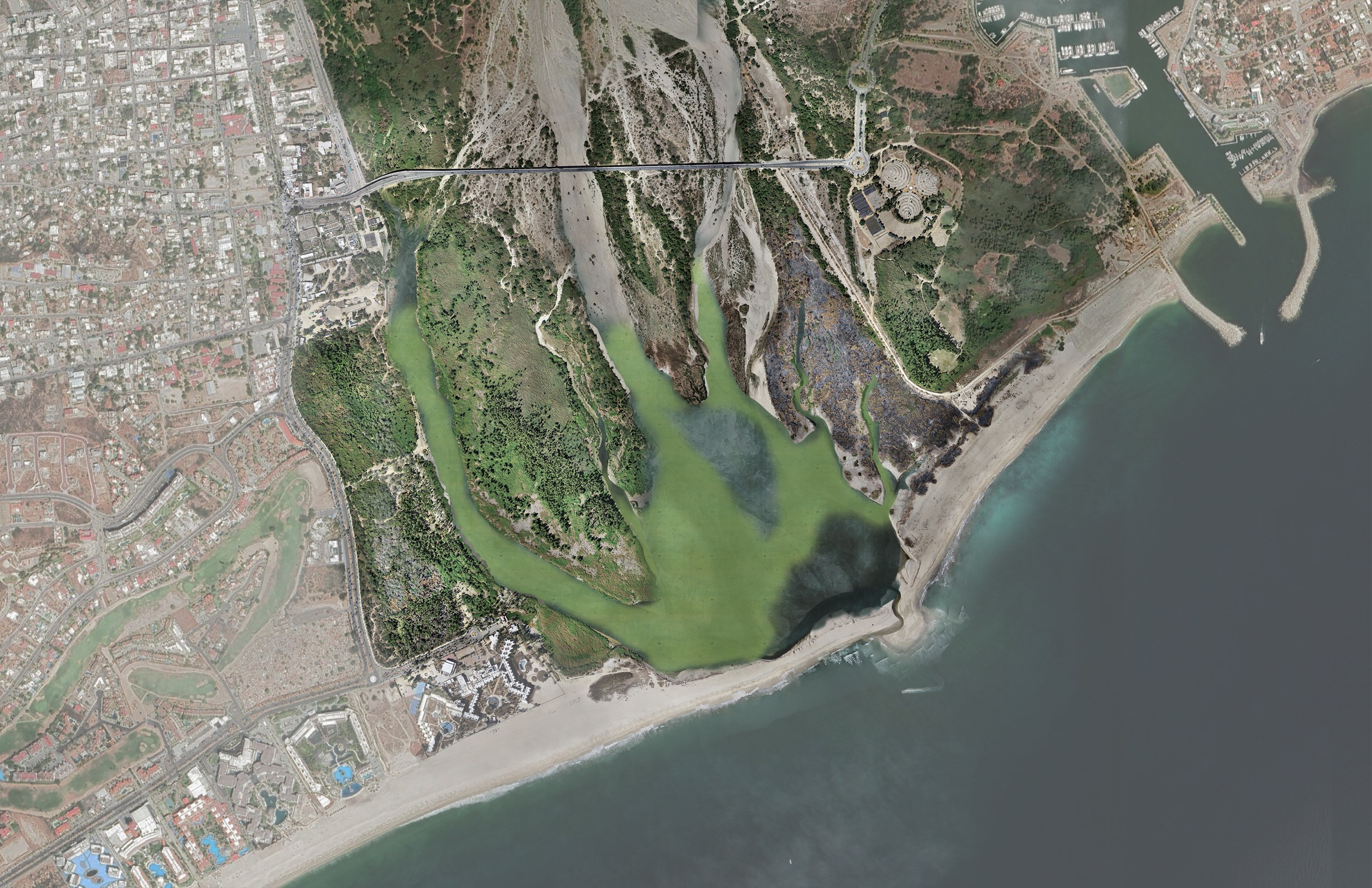
The bio-regional heart of southern Baja — the terminal expression of the Sierra de la Laguna watershed, a 317,295-acre mountain-to-sea system. 1,455 acres of Ramsar-protected wetland. 295 documented bird species. A designated Bird City. 12,000 years of continuous human settlement. The aquifer that supports Los Cabos depends on this system.
Los Cabos is listed among Mexican cities with overexploited aquifers. The San Jose del Cabo aquifer, the most important in the region, depends on this watershed for recharge. The estuary is a matter of water security.
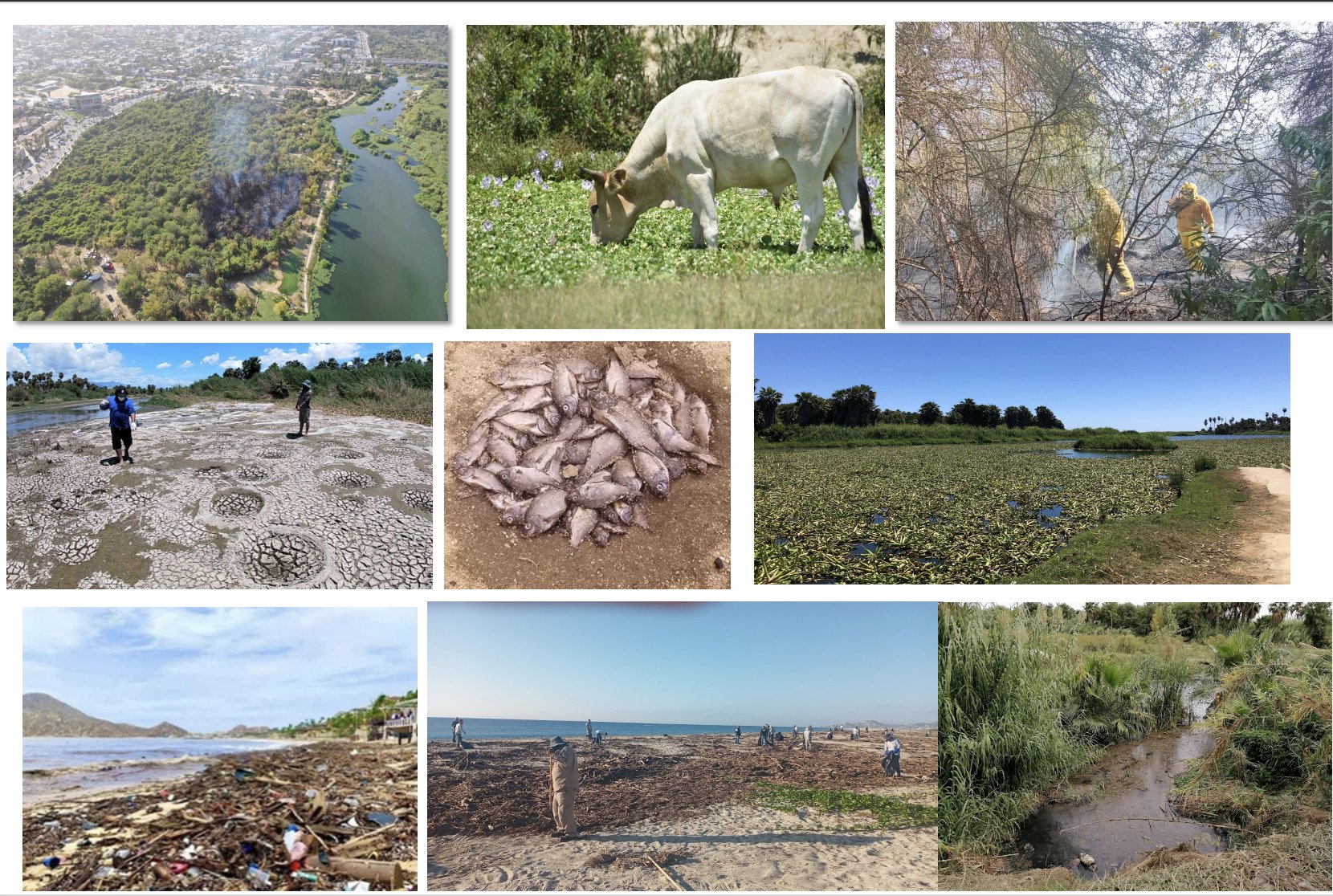
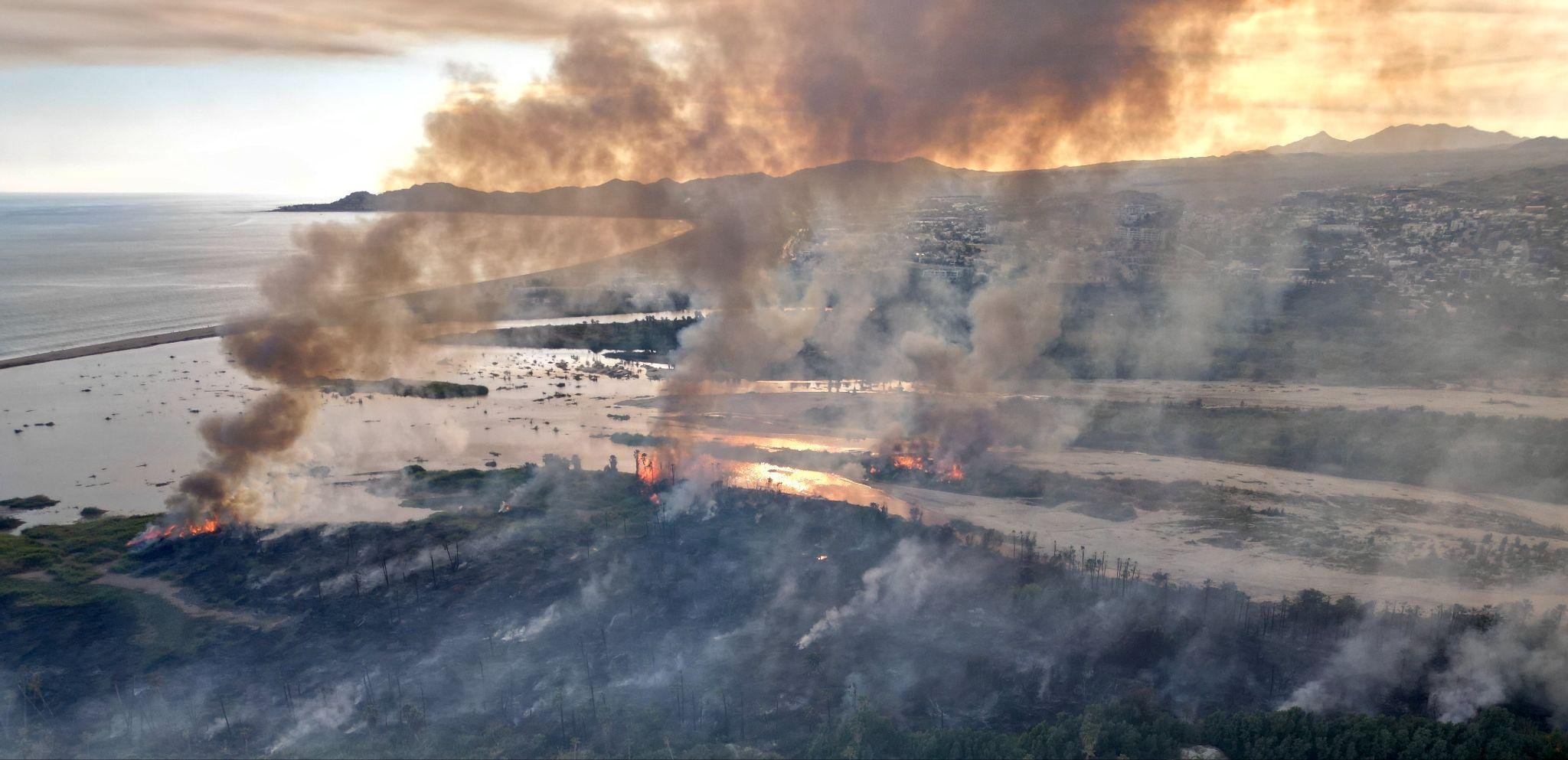
Wastewater dumping. Invasive species — salt cedar, water hyacinth. Cattle grazing, trash dumping, sedimentation, climate change. The estuary's water mirror has shrunk by an estimated 70%. Each stressor fuels the next in a self-reinforcing cycle of decline.
The aquifer has been in deficit since 1985 — overextracted by 3.4x. Only 5% of rainfall converts to recharge. Los Cabos — 244% population growth in 42 years, projected to reach 700,000–800,000 by 2040 — depends on this watershed for water security, hurricane and flood buffering, and natural cooling.
An avian airport — the Pacific Flyway's last refueling stop between the Arctic and Patagonia — a continental service station for millions of migratory birds. The Belding's Yellowthroat, a genetic vault found nowhere else on Earth. Western Monarchs and Painted Ladies depend on this corridor. The birds and insects that stop here are critical pollinators for the ecosystems they connect. What happens here echoes across hemispheres.
Without watershed restoration, aquifer recharge continues to decline. Without the aquifer, the city's water supply has no source. Without water security, the economic model that sustains Los Cabos has no future.
Decades of upstream erosion, sedimentation, invasive species, and wastewater contamination have severely degraded the system. The water mirror has shrunk by an estimated 70%. Each stressor fuels the next in a self-reinforcing cycle of decline. The system must be addressed as a system.
Ecosystem services valued at $100-280M USD per year. Los Cabos receives 2.8 million visitors annually. The cost of regeneration is finite. The cost of doing nothing is open-ended.
IISD Rapid Economic Valuation, February 2025
| If we do nothing… | If we regenerate… | |
|---|---|---|
| Public Health | Contaminated waterways, untreated wastewater, mosquito-borne disease risk | Clean water filtration, reduced contamination, healthier communities |
| Water Security | Aquifer recharge continues to decline, increasing dependency on desalination | Restored watershed function, natural aquifer recharge, long-term water resilience |
| Local Economy | Degraded landscape undermines tourism appeal, no cultural differentiation | New eco-tourism destination, cultural landmark, $100–280M in annual ecosystem services |
| Global Ecology | Pacific Flyway stopover collapses, cascading effects across hemispheres | Critical habitat restored for 295 species, flyway connectivity maintained |
| Climate | Lost carbon sink, reduced flood buffering, urban heat island intensifies | Carbon sequestration restored, natural cooling, hurricane and flood buffering |
| Protection | Legal protections exist on paper but ecosystem degrades beyond recovery | Science-backed restoration activates existing legal framework, governance model proven |
The Municipality has committed public co-funding and designated 2025 as "the Year of the Estuary." A 429-page Management Program has been ratified into municipal law. Four research institutions, two years of independent scientific assessment, over $1.4 million already invested. Phase 1 is fully funded. The window is open now.
The estuary is designated as a State Ecological Reserve with permanent legal protection. An Advisory Council (Consejo Asesor) composed of representatives from academia, government, NGOs, and landowners oversees the reserve. Its Scientific Sub-council provides independent technical validation. Federal, state, and municipal jurisdictions are coordinated through a nested governance model. Administration has been formally delegated to the Municipality of Los Cabos.