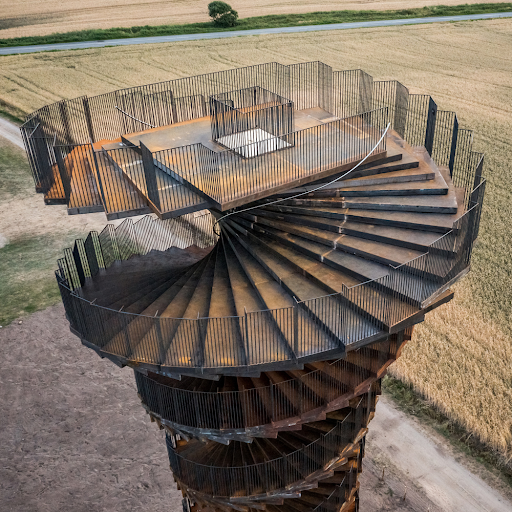
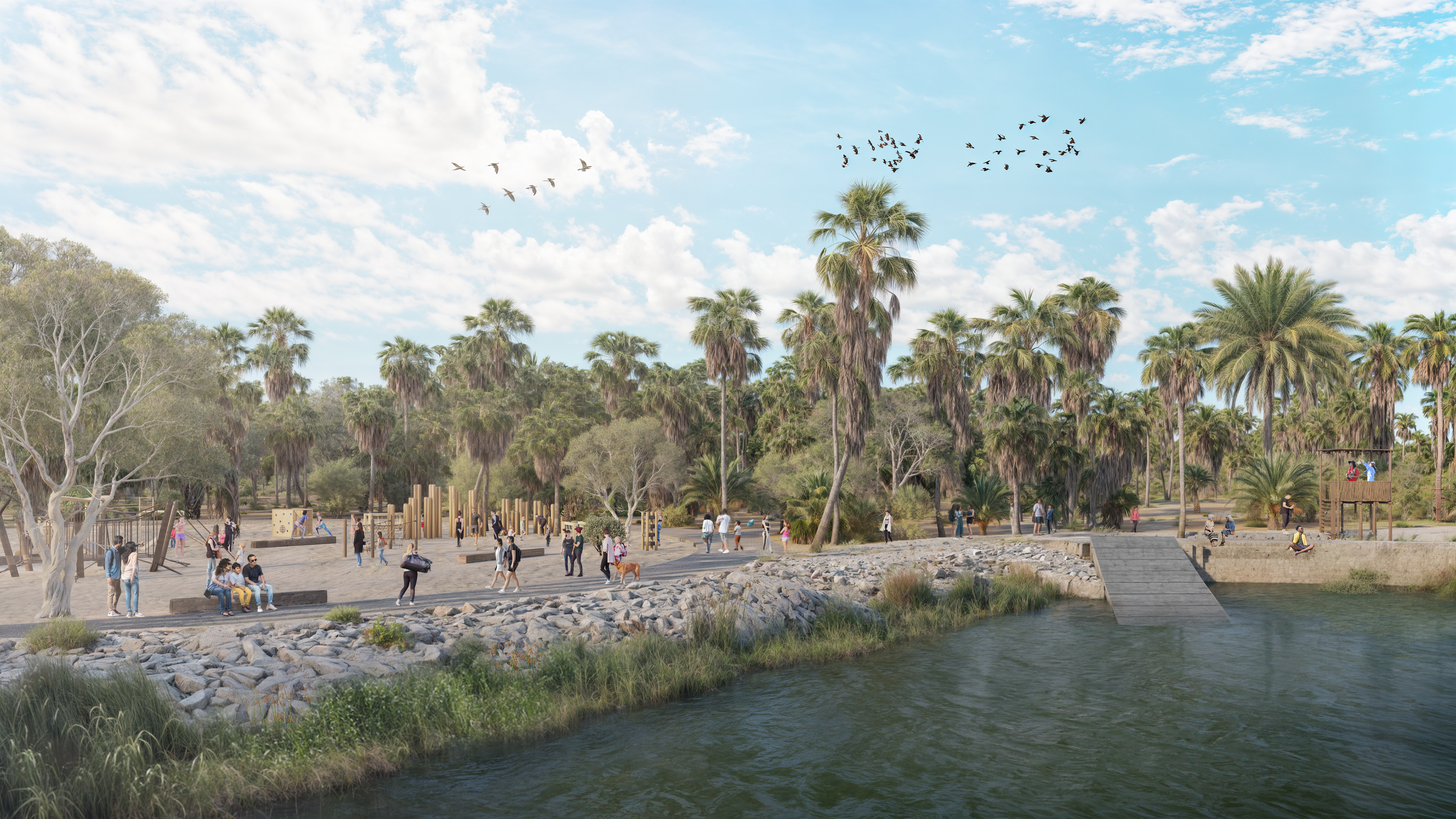
The estuary is the heart of the city — the final place where everything that happens across the watershed comes together. Here, there is an opportunity to create a single landmark structure: a birding outlook and scientific observation platform that combines public access with research infrastructure for bird monitoring and ecosystem data.
Not simply a structure — but a point of elevation. A place where people are invited to rise, to look outward, and to see the living system they are part of from a new perspective. With plan approval for additional structures in future phases.
Art and ecology, not as separate efforts, but as a single act of care.
Restoration as a creative act
An international design challenge for a single iconic birding outlook at the edge of the estuary — publicly accessible, enduring, and deeply rooted in place.
The structure may take the form of an observation tower, shelter, or inhabitable artwork — offering a moment of ascent that physically lifts visitors above the ground plane, and in doing so, shifts awareness. It could also hold monitoring antennas for the State University's bird research program, combining public access with research infrastructure for bird monitoring and ecosystem data.
From above, the estuary reveals itself differently: patterns of water movement, bird migration, seasonal change, fragility, resilience.
This structure — if realized — would not sit apart from the restoration. It would participate in it. It would make visible what is otherwise unseen: the slow work of regeneration, the return of habitat, the shared responsibility of stewardship.
Not an object placed onto the landscape, but an experience that deepens relationship to it.
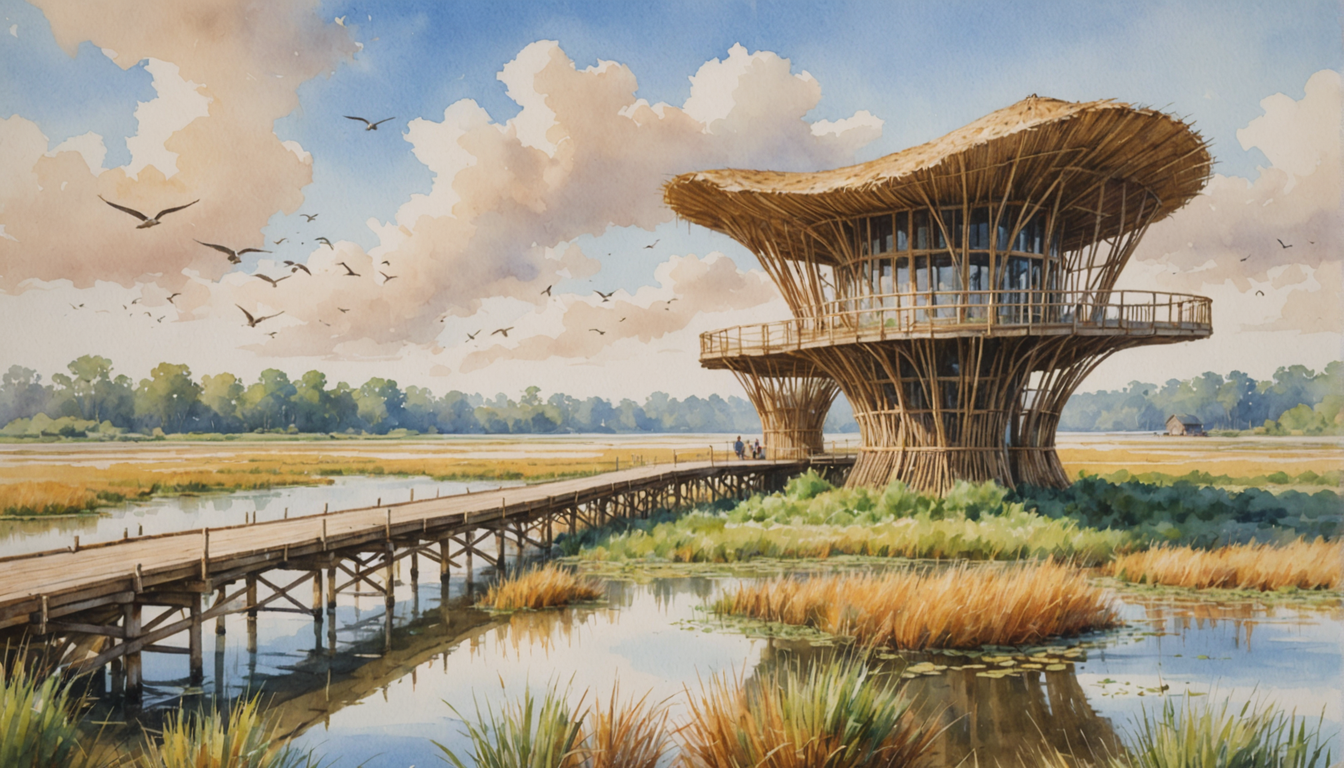
When we change vantage point, we change perception. And when perception shifts, so does care.
An elevated perspective does something subtle but powerful — it allows people to see beyond the immediate, to understand scale, interconnection, and consequence. In that moment, the estuary is no longer background. It becomes foreground, system, and story.
These potential structures offer more than access. They offer orientation — a way of locating oneself within a living ecology.
If this opportunity moves forward, it will do so through a process rooted in place and community.
Engagement with local residents, ejido leadership, conservation partners, and municipal stakeholders to define what is appropriate — materially, culturally, and ecologically.
An invitation to artists and designers to respond — not with imposed ideas, but with proposals shaped by the conditions and spirit of the place. The format — whether open call, curated, or hybrid — is intentionally being held open as this vision develops.
A multidisciplinary review process considering artistic vision, ecological sensitivity, feasibility, and long-term stewardship.
When ready, proposals would be shared publicly — marking a transition from possibility into form. Target horizon subject to alignment and approvals.
Submitted designs remain the intellectual property of their creators until a formal agreement is executed.
BIG's Marsk Tower in the Danish Wadden Sea is the direct inspiration for the Osprey Posadero Design Challenge. A single sculptural structure that increased regional visitation by over 200% and anchored a UNESCO heritage site — proof that a landmark observation structure can transform a landscape's relationship with the public.
In NW Arkansas, the Crystal Bridges and Art Trails corridor generated $232.6M in economic activity and 3,400 jobs by 2022. Art infrastructure as regional economic engine.
Los Cabos already has the natural asset base and the tourism infrastructure. What it does not yet have is the landmark — a birding outlook and scientific observation platform that becomes the reason people come and the reason they stay longer.